
From My Desk to Barcelona: What a Business Trip Looks Like
Some weeks remind you of why you love doing what you do. This was one of them.
When you manage marketing for multiple businesses, travel comes with the territory — not the glamorous, laptop-on-a-sunlounger kind you see on Instagram, but the purposeful kind. The kind where you board an early flight with a notebook full of questions and come home with answers that genuinely change how you do your work.
This trip took me to Spain. Specifically, to the headquarters of Dibar Coffee in Montmelo, just outside Barcelona — and it turned out to be one of the most valuable few days I’ve had in a long time.
Why I Visited Dibar Coffee
Since late 2025, I’ve been working with the UK distributor for Dibar Coffee — building their online store, directing product photography and laying the groundwork for their digital presence. It’s a brand I’ve grown genuinely fond of, and when you’re marketing a product you believe in, you want to get it right.
In April 2026, I was flown out to meet the core C-suite team at their headquarters. For me, this wasn’t just a courtesy visit. It was a research trip. When you’re marketing someone’s product, there’s only so much you can understand from a brief and a Zoom call. At some point, you have to step into their world.
Day 1 — Arrival in Palamos
I flew out on a Monday morning, landing in the Catalan coastal village of Palamos — a lively, sun-warmed place with the kind of unhurried energy that immediately loosens your shoulders. The plan for the day was simple: get settled, take a slow walk around, and think.
On the journey over, I’d been turning over the questions I needed answered. One of my biggest challenges marketing Dibar Coffee had been a gap in my own knowledge — I didn’t fully understand what made this a premium, specialty coffee, and that gap showed in my copy. Subtly, but it showed.
Take one of their flagship products: a 1kg bag of beans grown at an altitude of 2,000–2,200 metres. The original product description didn’t clarify whether those beans came from a single origin or multiple — which, for anyone serious about specialty coffee, is a meaningful distinction. I suspected there was a richer story to tell. I just needed someone to tell it to me.
Day 2 — Inside Dibar Coffee HQ
We were up early. My travel companion Maisy and I made the drive from Palamos to Montmelo, arriving at the Dibar facility mid-morning.
I wasn’t quite prepared for what greeted us.
The building was an enormous three-floor warehouse — the kind of space that makes sense in Spain, where commercial property is far more affordable than back home. But it was anything but industrial inside. A soaring entrance hall with black marble floors led into a bright, glass-fronted open-plan office. Above that, a museum. Below, the roastery and dispatch facility. It had the feel of a company that takes itself seriously without taking itself too seriously.
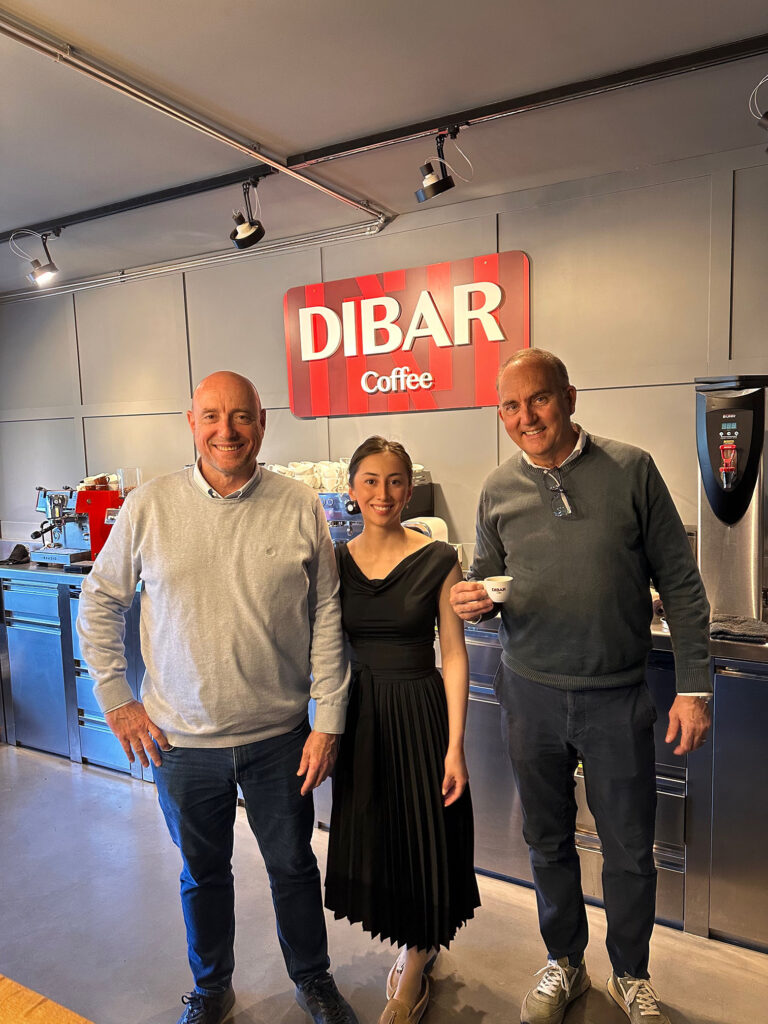
We were welcomed by Jordi, the CFO — warm, direct, and gracious. I speak broken Spanish at best (I grew up in Spain and lived there for several years, but it had been well over a decade since I’d had a proper conversation in the language), and there was something quietly joyful about dusting it off again. Jordi seemed to appreciate the effort, and the ice was broken before we’d even reached the stairs.
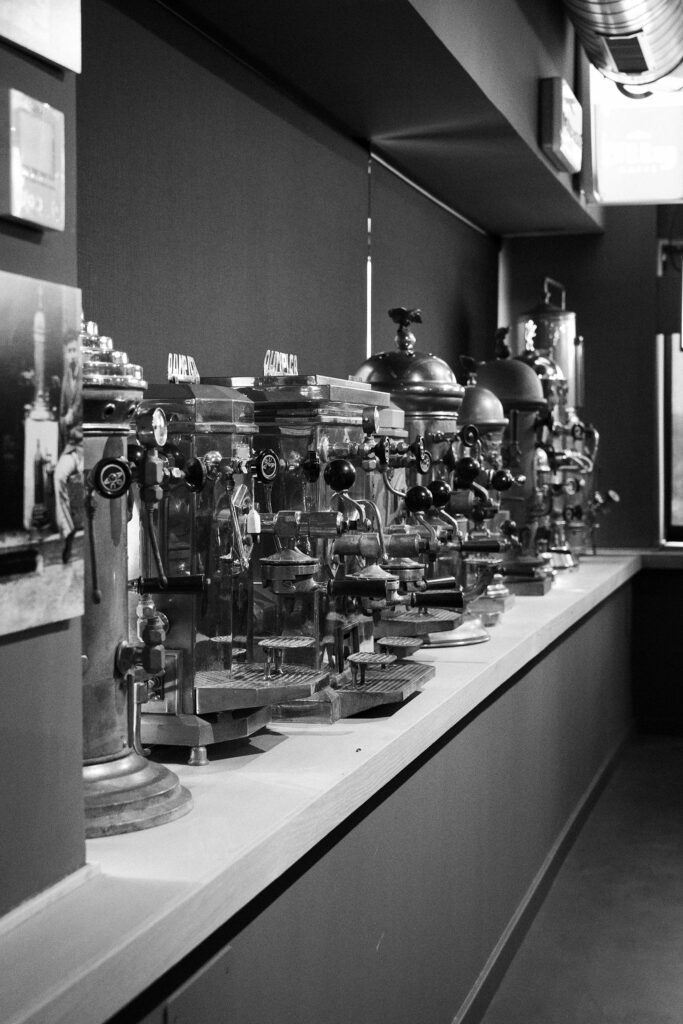
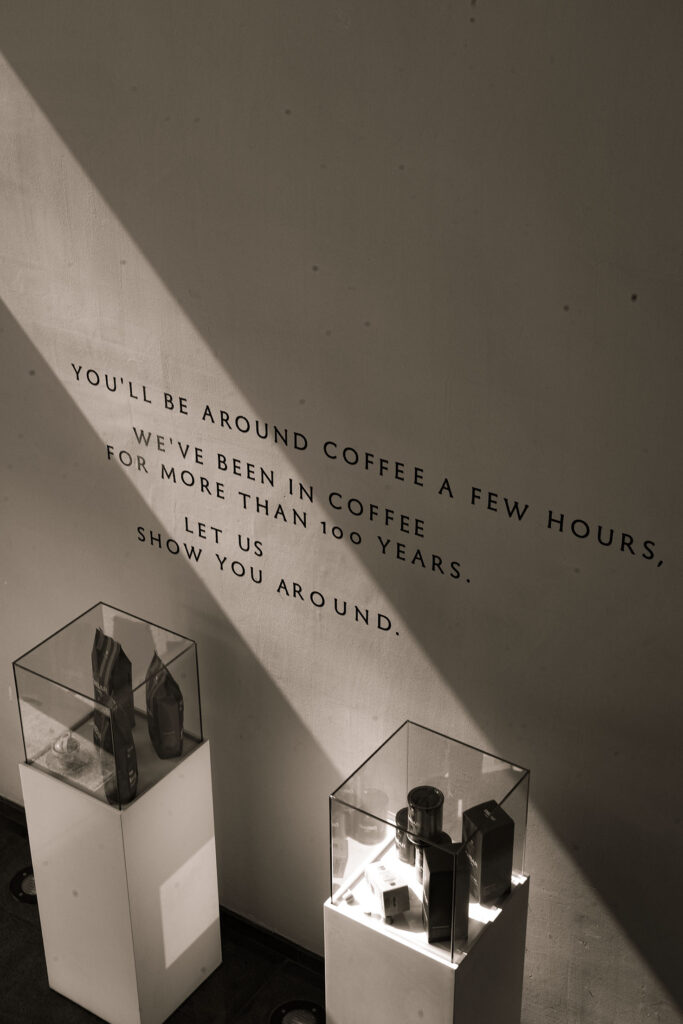
He took us to the museum first. It was unlike anything I expected — a curated collection of artefacts assembled over years by the two owners: Julian and his partner. The walls were lined with photographs Julian had taken during visits to coffee plantations across the world. There were older family photos too, because Julian’s family have been in coffee for over a century — pioneers, as it turns out, in the invention of early coffee machines. Original grinders, roasters and some of the first espresso machines ever made. It was a quiet but powerful way to understand that this isn’t a brand built overnight.
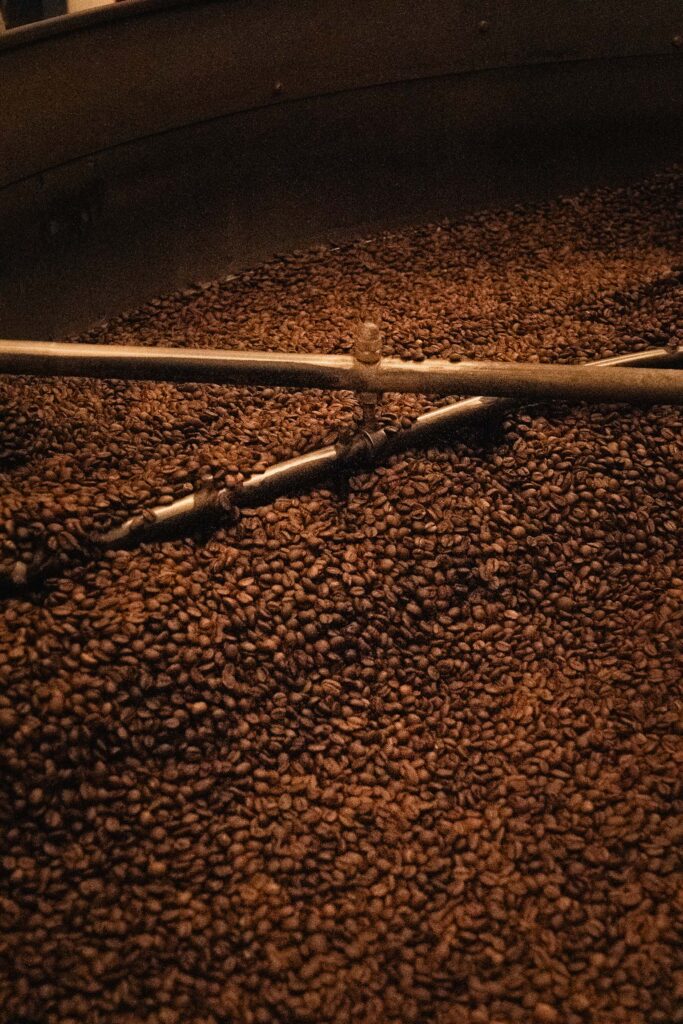
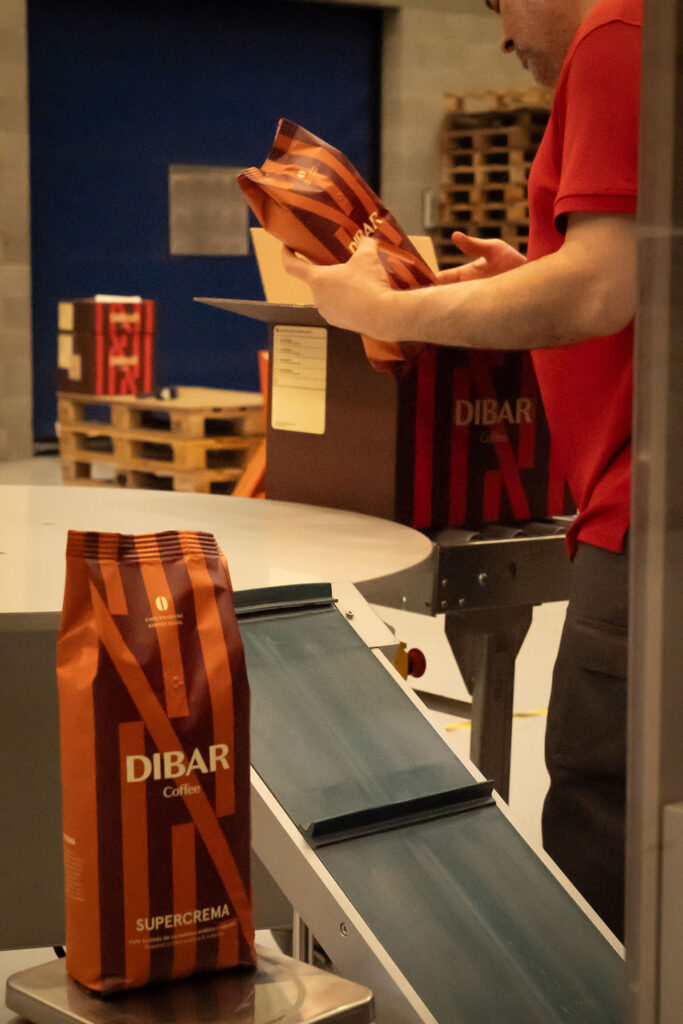
From the museum, we headed down to the roastery. Only one product range is roasted at a time — a deliberate choice to protect consistency and quality. That day, they were running their Supercrema beans. I had my camera with me, and I spent time capturing the process: the hum of the roaster, the sound of beans being bagged and the precise, unhurried rhythm of the team at work.
Throughout the tour, I asked every question I could think of. What does the testing process look like when a new batch of sample beans arrives? (They come in olive green, I learned, before drying.) What makes a coffee genuinely great? What’s the correct terminology when marketing a specialty product, and — critically — what can and can’t I claim? That last question matters more than people realise. Honest marketing isn’t just ethically right, it’s strategically smart. And in a market as crowded and passionate as specialty coffee, it’s the difference between a brand people trust and one they scroll past.
By the end of the tour, I had my answer on the beans too: the 1kg bag at altitude? Five origins. A detail that, once woven into the right copy, transforms a product description into a story.
After a few hours, we said our goodbyes and headed into Barcelona for the afternoon — a visit to Gaudí’s Sagrada Família, a wander through the Mercat de la Boqueria, and a stop at a small, charming café that stocked Dibar Coffee on the shelf.
Days 3 & 4 — Reflecting, Planning & Going Home
The final two days were slower, but no less productive. I edited the footage I’d shot, shared some thoughts on LinkedIn, and began drafting new copy for upcoming ads — copy that felt, for the first time, properly grounded.
One evening, Maisy and I joined Jordi for dinner. Tapas, conversation, and a couple of bottles of Spanish Cava. We talked about travel, about our lives, about things that had nothing to do with coffee or marketing. And that, I’d argue, is as important as anything else on a trip like this.
Business relationships aren’t purely transactional — or at least, the best ones aren’t. Europeans, in my experience, understand this better than most. They want to know the person across the table, not just their job title. They remember the details. And when you take the time to build that kind of familiarity, what you get in return is something no contract can guarantee: loyalty.
What I Learned: Tips for Marketers Who Travel for Work
Get curious about the product — beyond what it says on the tin. The details in your marketing reveal how deeply you understand what you’re selling. Expertise builds trust, and trust converts. If you’re marketing something, take the time to become a genuine student of it. Ask the questions that feel almost too basic to ask. The answers are usually where the best copy lives.
Build relationships that go beyond business attire. This is something you learn from doing business in Europe that no business school teaches you. Ask about people’s lives. Remember what they tell you. Invite them to dinner. Have a real conversation. The relationships that last — and the ones that bring the best work — are built in those moments, not in boardrooms.
Do you travel for client work? I’d love to hear how you make the most of those trips — drop an email to alicia@aliciawainhouse.com

